
When Silence Is Survival
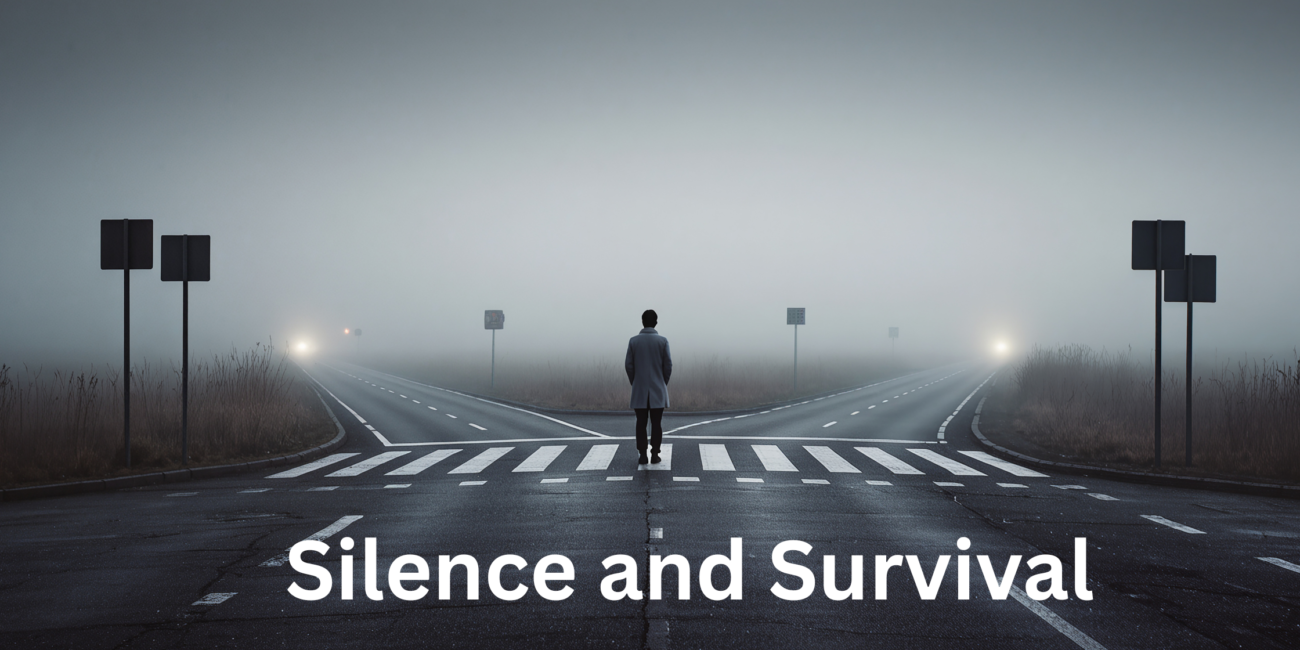
Silence is often treated as a moral failure.
If you didn’t speak up, you must have agreed. If you stayed, you must have wanted it. If you complied, you must have been complicit.
This logic is neat. It’s also wrong.
Silence is frequently a survival strategy adopted in environments where speaking has already proven unsafe.
People don’t go silent because they don’t know something is wrong. They go silent because they know exactly what will happen if they name it.
In prison, silence is sometimes the only currency you control. You learn when to look away, when to keep your head down, when to let something pass. You learn that being right doesn’t protect you. Being quiet might.
Outside, the stakes are less visible but no less real.
An employee watches a boss cross lines and stays quiet because rent is due. A woman laughs off a comment because she’s the newest person in the room. A survivor doesn’t report because the last person who did was destroyed. A family member stays silent because speaking would fracture the only support system they have.
Silence is not consent. It’s often evidence of constraint.
What’s especially corrosive is how institutions treat silence once harm is exposed. Instead of asking what conditions made speaking unsafe, we ask why the person didn’t say something sooner. Silence becomes retroactive proof that nothing was wrong.
This is how systems protect themselves.
By the time someone does speak, the story is already framed against them. They’re accused of exaggeration, ulterior motives, instability. Their survival strategies are recast as moral flaws.
Meanwhile, everyone watching learns the lesson. They learn what happens when you speak. They learn who is protected. They learn whether silence is safer.
This is how silence spreads—not because people are weak, but because they’re paying attention.
If we want less silence, we have to stop treating it as a character defect and start treating it as information. Silence tells us where power is concentrated. It tells us where protection is absent. It tells us who is absorbing the cost of keeping things running smoothly.
The question isn’t why people stay silent. The question is what made silence the safest option in the first place.
